CASE STUDY 01
Architecting a multi-sided ecosystem that connects microclimate-aware plant care, live nursery inventory, and landscaping consultations.
Who Are My Users?
UPLD brings together people who care for plants at home and the local professionals who can help them.
EVERYDAY PLANT OWNERS (B2C)
People trying to keep plants alive. They are frustrated by generic care guides that ignore real-life details, like indoor humidity, home temperature, and light.
LOCAL NURSERIES & LANDSCAPE PROS (B2B)
Professionals who want to reach the right clients, show what is in stock now, and schedule consultations without messy phone calls or scheduling chaos.
The Problem We Solved
People could not find care tips that matched their local conditions. They could not check whether a nearby nursery actually had a plant in stock. And when they needed expert landscaping help, booking a consultation felt harder than it should.
Research Methodology & Competitive Analysis
Alongside the competitive audit, I conducted user research with eight participants to collect firsthand user data. To ground early decisions in the existing market, I also reviewed four comparable plant-care and gardening platforms-PlantNet, PictureThis, Planta, and NaturaDB-across mobile and desktop touchpoints.
WHAT I COLLECTED
For each product, I mapped its core offer, target audience, and device focus, then compared onboarding, plant identification, care guidance, reminders, search, navigation, visual language, pricing cues, and accessibility considerations. I also documented clear strengths, friction points, and missed opportunities.
HOW I COLLECTED IT
I carried out a structured desk-research audit, moving through each experience as a first-time visitor and recording the same categories in a comparison matrix. This created a consistent view across flows, content, and interface patterns rather than relying on isolated screens.
The audit showed a common emphasis on quick plant identification and care reminders, but also recurring friction around dense onboarding, unclear plan boundaries, and navigation that did not always make advanced features easy to find. These findings informed UPLD’s clearer task paths and contextual guidance.
Design Thinking & Approach
I started with the real situations people face, then designed around them. Research insights helped define the problems, and each step focused on making the next action simple, friendly, and easy to understand-so the product reduces frustration instead of adding to it.
Why These Wireframes & Solutions
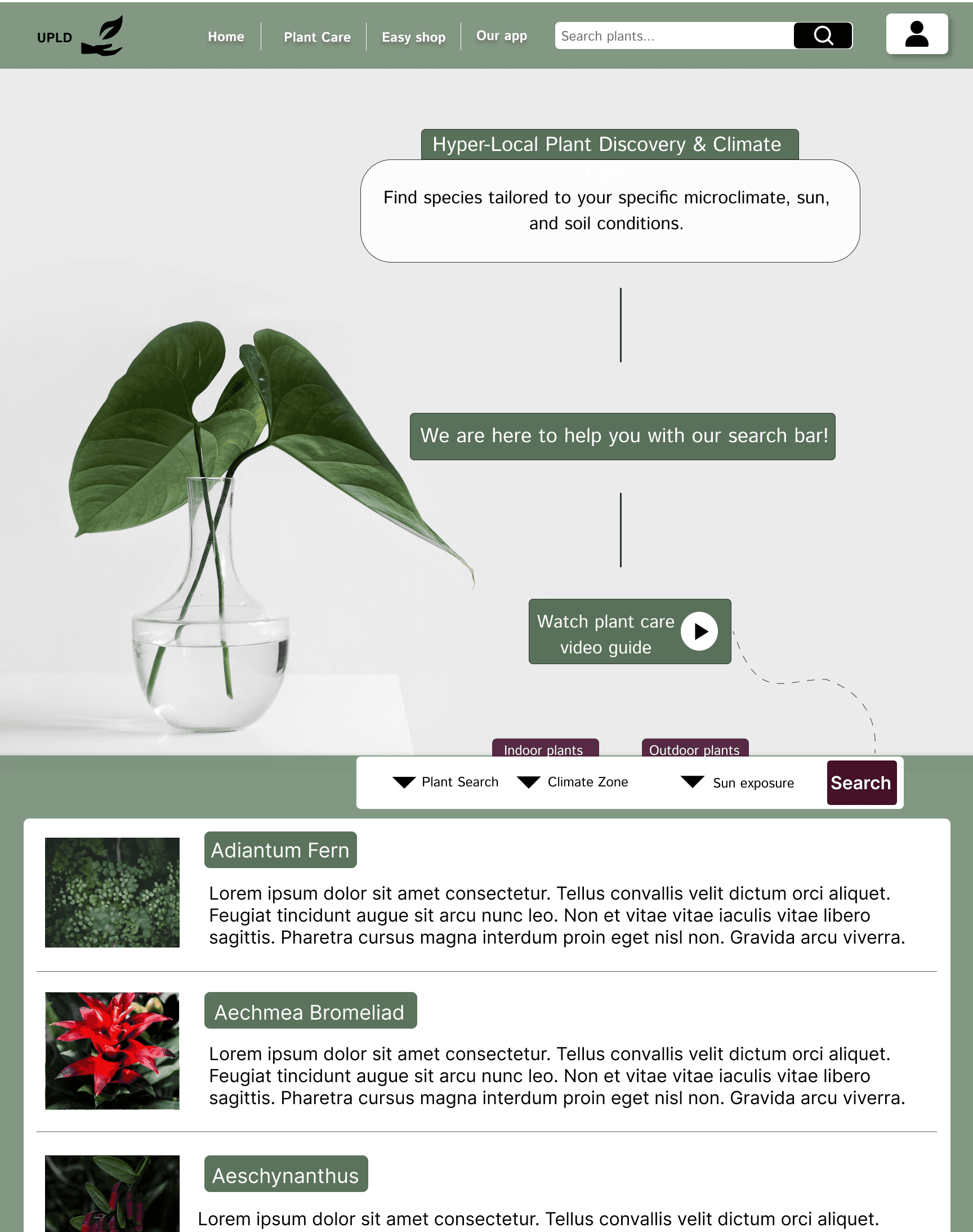
The wireframes keep each task clear and focused. Adaptive Care Logs give users personal care steps based on their actual environment. Live Stock Search lets them check real-time nursery inventory before making a trip. Simple Booking Flows turn a moment of need into a quick, clear consultation request.
KEY WIREFRAMES

Home - plant discovery and local context
Plant Care - guidance shaped by real conditions
Results & Strategic Outcomes
UPLD turns the competitive audit into a more connected, climate-aware, and accessible plant-care experience.
Local Connection
UPLD bridges the market gap by connecting plant care needs directly with local professionals and garden centers.
Climate-Aware Care
Plant advice is tailored to regional climate zones, helping people act on guidance that fits their context.
Clearer Access
Simple, accessible pathways bring key tasks into focus, making care, discovery, and expert support easier to navigate.